


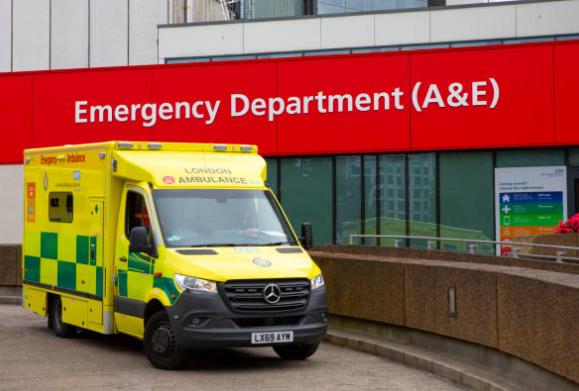
No most private hospitals in the UK do not run an A&E (Emergency Department) and cannot accept walk-in emergencies like heart attacks, strokes or major trauma.
They typically offer urgent care (minor injuries/illnesses), same-day GP, and rapid diagnostics — often within hours — but life-threatening emergencies belong in NHS 999/A&E.
👉 Need fast private access for non-emergencies?
💡 Get a Free Health Insurance Quote
Emergency vs Urgent Care: what’s the difference?
| Care type | Typical conditions | Where to go | Notes |
|---|---|---|---|
| Emergency (life-threatening) | Chest pain/possible heart attack, stroke symptoms, severe breathing difficulty, major head injury, heavy bleeding, severe burns, anaphylaxis | 999 / NHS A&E | Do not attend a private hospital unless advised by 999. Most private sites have no resus/A&E. |
| Urgent (non-life-threatening) | Suspected fractures or sprains, cuts needing stitches, minor head injury without red flags, severe ear/eye infections, UTIs, worsening asthma without severe distress | Private urgent care clinic or same-day private GP | Many private hospitals/centres run urgent care clinics 7 days a week. |
| Routine / fast access | Scans (MRI/CT/ultrasound), blood tests, specialist consults, elective surgery | Private hospital/clinic | Self-pay or insurance. Often same-week appointments. |
What private hospitals usually provide instead of A&E
- Urgent Care / Walk-in clinics (minor injuries & illnesses)
- Same-day or next-day private GP appointments (prescriptions, referrals)
- Rapid diagnostics (bloods, X-ray, ultrasound, MRI/CT)
- Elective surgery (e.g., hernia, orthopaedics, cataract) with pre-booked admission
- On-site pharmacy and nursing support (varies by site)
Some flagship private sites operate urgent assessment units with enhanced capability — but they’re not a substitute for A&E and will redirect or arrange transfer if you’re critically unwell.
When should you call 999 or go straight to NHS A&E?
Go immediately to A&E or call 999 for:
- Chest pain/pressure, suspected heart attack
- Sudden facial droop/arm weakness/speech problems (stroke)
- Severe shortness of breath or blue lips
- Heavy bleeding, deep wounds, major fractures
- Severe head injury, confusion, seizures
- Serious burns
- Anaphylaxis (swelling, breathing problems, hives after allergen)
Private hospitals will not be able to provide the full resuscitation and trauma pathways available in NHS A&E.
Typical costs at private urgent care & GP clinics (self-pay)
| Service | Typical 2025 price |
|---|---|
| Private urgent care assessment (walk-in) | £95–£175 |
| Private GP same-day appointment | £75–£150 |
| X-ray | £100–£180 |
| Ultrasound (non-obstetric) | £200–£350 |
| MRI (one body part) | £250–£450 |
| Stitches / wound care | £120–£250 (plus dressings) |
| Fracture assessment + boot/splint | £150–£350 (device extra) |
Prices vary by city and provider; complex cases may be referred to NHS A&E.
👉 Useful pricing context:
- Private X-Ray Cost UK
- Private Ultrasound Cost UK
- Private CT Scan Cost UK (2025)
- Private MRI vs NHS in the UK
Will health insurance cover urgent/ER-type problems?
Usually yes for acute, eligible conditions — but there are important caveats:
- Emergency care itself is delivered by the NHS; PMI is not a substitute for 999/A&E.
- After stabilisation, insurers may cover private inpatient care, surgery or diagnostics if clinically appropriate and pre-authorised.
- Most policies exclude: routine GP, long-term chronic condition management, and non-eligible minor illnesses (unless you have optional add-ons).
- Many policies include virtual GP and 24/7 nurse helplines to triage your next step quickly.
👉 Related reads:
- Does Health Insurance Cover Diagnostics in the UK?
- Health Insurance with GP Access – Best Providers (2025)
- Health Insurance Waiting Periods (2025)
How to decide: private urgent care vs NHS A&E
- Check symptoms
- Red flags present? (severe chest pain, stroke signs, severe breathlessness, heavy bleeding, severe head injury) → Call 999 / go to A&E.
- No red flags, but needs prompt attention? → Private urgent care or private GP may be suitable.
- Call ahead (if safe to do so)
- Ask the private clinic: “Do you treat [symptom], and what’s the wait today?”
- If they advise A&E, follow that advice.
- Insurance member?
- Call your insurer’s 24/7 helpline for triage and authorisation guidance.
Common conditions private urgent care can see (examples)
- Suspected sprains and simple fractures (with on-site X-ray)
- Cuts needing glue or stitches (non-severe bleeding)
- Infections: ear, throat, urinary, skin (no sepsis signs)
- Asthma flare-ups (without severe respiratory distress)
- Minor head injury without loss of consciousness/red flags
- Eye problems: conjunctivitis, corneal abrasion (no penetrating injury)
- Rashes, shingles, allergic reactions without airway compromise
If your assessment suggests risk of deterioration, reputable clinics will arrange NHS transfer.
What to bring to private urgent care
- Photo ID and payment method
- Medication list and allergy info
- Any recent test results or referral letters
- Insurance details (if applicable) for pre-authorisation
Pros & cons of private urgent care
Pros ✅
- Short waits (often walk-in within minutes)
- On-site X-ray/ultrasound/blood tests
- Longer consultation time, clear follow-up plans
- Evening/weekend availability at many sites
Cons ❌
- Not a replacement for A&E or 999 emergencies
- Self-pay costs; insurance cover varies for minor issues
- If you deteriorate, you may still be transferred to NHS
- Some services (e.g., CT with contrast) may require referral
FAQs
Can I go to a private hospital if I’m having a heart attack?
No — call 999. Private hospitals generally don’t have A&E or catheter lab pathways for acute MI.
Do any private hospitals have A&E?
A tiny number run limited urgent assessment services, but not full public A&Es. For life-threatening emergencies, use 999/NHS.
Will the NHS accept tests done privately?
Yes — NHS clinicians commonly accept reputable private reports and will continue your care, though local processes vary.
Can I get same-day scans privately?
Often yes for X-ray and ultrasound, frequently for MRI/CT depending on the site.
Bottom line
- Life-threatening emergencies → 999/A&E (NHS).
- Non-life-threatening but urgent issues → private urgent care or private GP for rapid assessment and diagnostics.
- Private hospitals excel at fast access to tests, specialists and elective treatment — but they’re not emergency departments.
- Find urgent and emergency care services – NHS
👉 Prefer private pathways for rapid access after triage?
💡 Get a Free Health Insurance Quote
👉 Explore prices: Private Hospital Price List UK
Disclaimer
⚠️ This guide is for general information only and is not medical advice. If you think you or someone else might be experiencing a medical emergency, call 999 immediately or go to the nearest NHS A&E. Always follow the advice of qualified healthcare professionals and the emergency services.











Leave a comment